Why some wheels carry two zeroes
Posted 16 October 2006 at 12:08
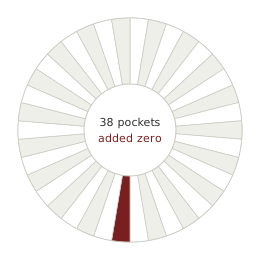
Two wheel layouts have been in wide circulation for well over a century, and they differ by exactly one pocket. One carries thirty-seven pockets, the numbers one to thirty-six plus a single zero. The other carries thirty-eight, adding a second zero pocket. Everything else about the two wheels, including the printed payouts, is generally identical.
That is what makes the pair such a clean illustration. The payout on a single number is thirty-five to one on both wheels. On the thirty-seven pocket wheel the outcome arrives once in thirty-seven, so a unit staked repeatedly returns thirty-six units for every thirty-seven staked. On the thirty-eight pocket wheel the same payout is set against a frequency of one in thirty-eight, and thirty-six units come back for every thirty-eight. The gap roughly doubles.
The historical order is the reverse of what most people assume. The single zero wheel is the later refinement rather than the original: earlier wheels carried both a zero and a second reserved pocket, and the single zero layout was introduced as a competitive change by operators seeking custom. The two layouts then spread along different routes and both survived, which is why a floor can carry either or both.
Because the difference is a single pocket, it is nearly invisible from a distance. The wheels look alike, the felt looks alike, and the printed payouts are word for word the same. The only reliable check is to count pockets or to read the head of the wheel, and the fact that this check is necessary is itself the most instructive thing about the pair.
There is a general lesson in it that goes beyond wheels. When two versions of a game carry the same payout table, the version with more outcomes is the version with the larger gap, and the size of that gap is not proportional to how different the two games look. A single added outcome in a small sample space is a large proportional change.
Posted in Game history | Permalink